
Are Silicone Beads Safe for Babies? A Safety Guide
Table of Contents
- What Is Food-Grade Silicone and Why It Matters for Babies
- Food Grade Silicone Safety Standards and Certifications
- Choking Hazards and Mechanical Safety for Silicone Beads
- How to Clean Silicone Teething Beads Safely
- DIY Pacifier Clip Safety Regulations and Assembly
- Age-Appropriate Usage and Allergy Considerations
- How to Verify Your Silicone Beads Are Actually Safe
- Frequently Asked Questions
Last Updated: September 2, 2026
What Is Food-Grade Silicone and Why It Matters for Babies
Food-grade silicone is a polymer material manufactured to meet strict safety standards for contact with food and human skin, making it ideal for baby products like teething jewelry and pacifier clips. Unlike regular silicone, food-grade variants undergo rigorous testing to ensure they don't leach harmful chemicals when chewed or heated. This matters because babies naturally explore objects by putting them in their mouths, creating direct contact with sensitive tissues.
The silicone density and curing process determine whether a bead is truly food-grade or merely labeled as such. High-quality food-grade silicone is non-toxic, phthalate-free, and BPA-free by design. At Barkers Creative Designs, we work with crafters who prioritize these specifications when sourcing beads for children's products, recognizing that material safety is the foundation of responsible DIY manufacturing.
Food-grade silicone stands out for its hypoallergenic properties and heat resistance. Babies with sensitive skin tolerate silicone better than many alternatives because the material resists bacterial colonization and doesn't trap moisture. The polymer structure also allows safe sterilization through boiling or dishwasher cycles without degradation, a critical feature for items that enter a baby's mouth repeatedly.
Food Grade Silicone Safety Standards and Certifications
Safety certifications transform "food-grade" from a marketing claim into a verifiable standard. The most recognized certifications include FDA compliance, LFGB (European standard), and third-party testing documentation. These frameworks exist because regulatory bodies recognize that material composition alone doesn't guarantee safety, manufacturing practices, quality control, and mechanical integrity matter equally.
FDA Approval and BPA-Free Certification
The FDA doesn't "approve" silicone beads like medications, but it regulates silicone used in food contact applications under 21 CFR 177.2600 (the FDA). This regulation sets limits on extractable substances when silicone contacts food or beverages. For baby products, the same standard applies: if a bead could contact a baby's mouth, it must meet these extraction limits.
BPA-free certification indicates that manufacturing explicitly excludes Bisphenol A, a chemical known to leach from certain plastics under heat or stress. Silicone doesn't naturally contain BPA, but some manufacturers use BPA-based additives or cross-contamination can occur during production. Legitimate BPA-free certifications come from third-party testing, not manufacturer claims alone.
The difference between "food-grade" and "non-toxic" is important. Food-grade refers to regulatory compliance; non-toxic means the material won't poison a child if ingested in small quantities. A bead can technically be food-grade but still harbor surface bacteria if not properly cleaned, so certification is a starting point, not a complete safety guarantee.
ASTM Standards and Third-Party Testing
ASTM F963 is the mandatory safety standard for toys sold in the United States, covering mechanical hazards, chemical safety, and age-appropriate use (astm.org). For silicone beads marketed as baby products, compliance with ASTM F963 is non-negotiable. This standard includes tensile strength testing to ensure beads won't fracture under normal chewing force.
Third-party testing provides independent verification that beads meet stated standards. A reputable manufacturer will have documentation from accredited labs showing results for leaching tests, tensile strength, and small parts compliance. When sourcing beads from suppliers like Barkers Creative Designs, requesting third-party test certificates is a reasonable expectation.
CPSIA compliance (Consumer Product Safety Improvement Act) applies to children's products and requires testing and documentation of compliance before sale. For silicone beads, this means manufacturers must test batches and maintain records proving they meet lead, phthalate, and other restricted substance limits.
Choking Hazards and Mechanical Safety for Silicone Beads
Choking risk is the primary mechanical hazard with silicone beads. A bead that's too small, breaks apart easily, or has a weak connection point can become an airway obstruction. This is a physical safety issue that depends entirely on bead diameter, assembly quality, and tensile strength.
Bead Diameter and Small Parts Regulations
The small parts regulation in ASTM F963 defines a choking hazard as any object that fits inside a small parts cylinder, essentially a tube 1.25 inches in diameter and 2.25 inches long (cpsc.gov). Any bead fitting through this cylinder is prohibited for children under 8 years old. This is why pacifier clips and teething jewelry often use beads 12mm or larger in diameter.
Age-appropriate usage matters. A 10mm bead is technically a small part and shouldn't be marketed to parents of babies under 3 years old. Many manufacturers avoid this risk by using 15mm+ beads for infant products, which are large enough to pose no choking hazard while still being chewable. When assembling DIY pacifier clips or teething jewelry, choosing the right bead size for the child's age is a safety decision.
Knot Security and Tensile Strength
A bead assembly is only as safe as its weakest connection point. If beads are strung on cord that's too thin, knotted poorly, or attached to a clip that pulls loose under tension, the entire safety profile collapses. Tensile strength testing measures how much force a bead can withstand before fracturing or separating from its attachment.
High-quality food-grade silicone beads typically withstand normal chewing and pulling without breaking. However, poor assembly practices, using weak thread, loose knots, or inadequate securing methods, create failure points that testing never would have predicted. Professional assembly uses techniques like double knots, knots secured with bead caps, or adhesive-backed knot covers that prevent unraveling.
How to Clean Silicone Teething Beads Safely
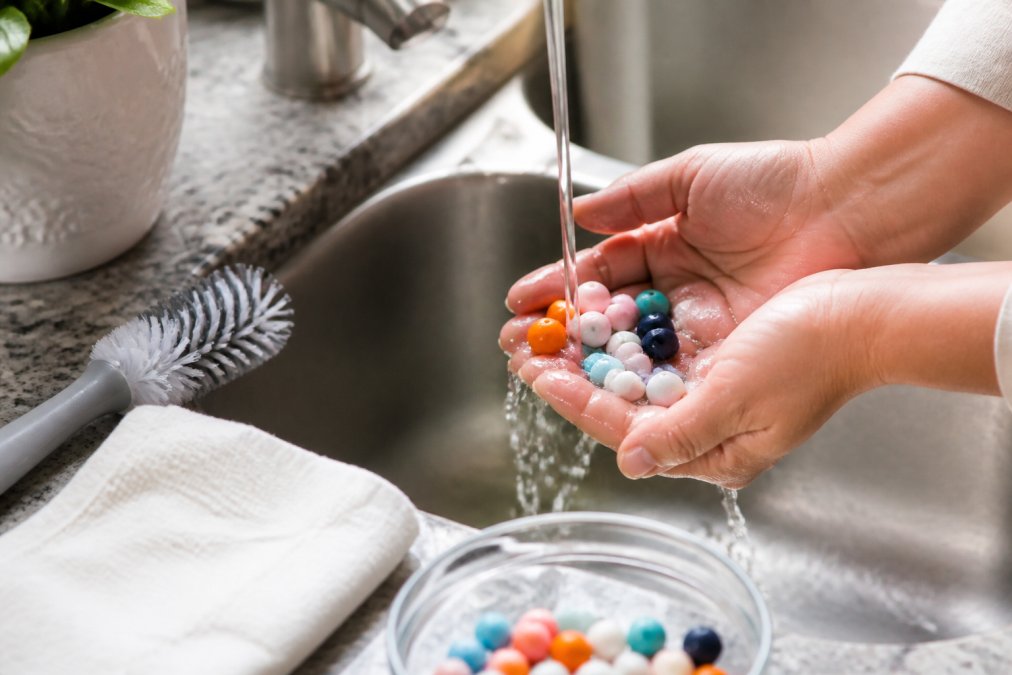
Silicone beads are inherently easier to sanitize than many materials, but cleaning practices still matter. Food-grade silicone resists bacterial colonization better than wood or fabric, but surface contamination can occur during manufacture, storage, or handling.
Sterilization Methods and Heat Resistance
Food-grade silicone tolerates temperatures well above normal use conditions. Boiling at 212°F (100°C) is safe and effective for sterilization. Most food-grade silicone beads withstand this heat without degradation, though checking manufacturer guidance is wise because some adhesives or finishes might have lower heat tolerances.
Dishwasher sterilization is another reliable method. The high heat cycle (typically 155-160°F) and detergent action remove organic matter and kill bacteria. Place beads in a mesh bag to prevent scattering. Avoid the heated dry cycle if possible; air-drying is gentler on finishes or adhesives.
Silicone's heat resistance makes it one of the easiest baby materials to sanitize thoroughly. This durability is one reason silicone is preferred over materials that degrade under heat.
Regular Maintenance and Identifying Wear
Inspect beads regularly for signs of degradation. Food-grade silicone that's properly manufactured doesn't typically crack, peel, or discolor under normal use. If a bead develops visible cracks, discoloration, or a sticky residue, replace it. These signs indicate manufacturing defects or exposure to conditions that compromise the material.
Check that knots remain tight and beads don't move excessively along the string. If a knot loosens or a bead attachment point shows wear, re-secure or replace the component before the item goes back to a baby. Keep silicone beads in a clean, dry place away from direct sunlight, as prolonged UV exposure can degrade silicone over time.
DIY Pacifier Clip Safety Regulations and Assembly
Creating a pacifier clip or teething toy for a baby isn't just a craft project, it's a product manufacturing decision with legal and safety implications. Understanding CPSIA compliance and mechanical testing requirements separates safe DIY projects from potentially hazardous ones.
CPSIA Compliance and Mechanical Testing
The Consumer Product Safety Improvement Act requires that any children's product sold or given away meet specific safety standards, including testing for lead, phthalates, and other restricted substances, plus mechanical safety testing. For DIY projects made for personal use, legal requirements are less stringent than for commercial products, but safety principles remain identical.
Mechanical testing checks that assembled products withstand expected stress. A pacifier clip should survive being dropped, pulled, and chewed without beads separating or breaking. While home crafters typically don't conduct formal testing, stress-testing your own projects by pulling firmly on each bead, dropping the clip repeatedly, and simulating chewing action reveals whether your assembly will hold up to actual use.
Keeping records of materials used, assembly methods, and any testing performed demonstrates due diligence. For commercial production, this documentation is legally required; for personal projects, it's a best practice.
Best Practices for Secure Bead Assembly
Start with high-quality thread or cord rated for the intended use, typically 1mm diameter cord for standard beads. Thin thread can cut into silicone under tension or break under chewing stress.
Use a double knot at minimum: tie an overhand knot, pull it tight, then tie another overhand knot directly on top of it. Some crafters add a bead cap (a small metal or plastic piece) over the knot to secure it further. Adhesive-backed knot covers provide an additional layer of security.
Leave minimal gap between beads and knots so a baby's fingers can't catch and pull on loose sections. Test the finished clip by trying to move individual beads; they should be snug and resist movement.
Age-Appropriate Usage and Allergy Considerations
Silicone beads are generally hypoallergenic, but individual sensitivities exist. Most babies tolerate silicone without issue, though some develop contact dermatitis or oral irritation.
Age determines both safety and appropriateness. Babies under 4 months old lack the motor control to safely hold beaded toys, so pacifier clips designed for older infants are more suitable. Teething typically begins around 4-6 months, making this the appropriate window for introducing silicone teething jewelry. By 8-12 months, babies can hold and chew independently.
Supervision is always required. Even the safest silicone bead assembly shouldn't be left unattended with a baby. If a baby develops redness, swelling, or irritation where silicone contacts skin, discontinue use and consult a pediatrician. Some babies may have sensitivity to specific dyes or additives used in colored silicone, even if the base material is food-grade.
How to Verify Your Silicone Beads Are Actually Safe
Marketing claims like "food-grade" and "non-toxic" appear on countless products, but verification separates genuine safety from false assurance.
Request third-party testing documentation. Legitimate suppliers provide certificates from accredited laboratories showing that beads meet FDA extraction limits, ASTM F963 standards, and CPSIA requirements. If a supplier can't provide these documents, the beads aren't verified as safe.
Check for specific certifications about BPA-free status, phthalate-free composition, and lead-free testing. Generic claims like "safe for babies" mean nothing without documentation. Examine the supplier's sourcing practices and request batch-specific testing when possible, as different manufacturing batches can vary in quality.
Perform basic sensory inspection. High-quality food-grade silicone has a consistent texture, no odor (or only a mild silicone smell), and uniform color. Beads with chemical odors, discoloration, or sticky surfaces may indicate manufacturing issues or contamination.
Choosing silicone beads for baby products combines material science, regulatory compliance, and assembly skill. Food-grade silicone offers genuine safety advantages when sourced from verified manufacturers and assembled with proper technique. Barkers Creative Designs provides access to food-grade silicone beads with third-party testing documentation, allowing crafters to build teething jewelry and pacifier clips with confidence. Verify certifications, master assembly techniques, and inspect finished products before use, these practices ensure that homemade baby products deliver the safety that parents deserve.
Frequently Asked Questions
Are silicone beads non-toxic and BPA-free?
Food-grade silicone beads are non-toxic and BPA-free when they meet FDA standards and carry third-party testing certifications. Look for products labeled as phthalate-free and lead-free. Reputable manufacturers provide documentation proving their silicone has been tested for harmful chemicals. If a seller cannot provide certification or safety data, the beads may not be genuinely food-grade. Always verify certifications before purchasing for baby products.
What safety standards should silicone beads meet for baby products?
Silicone beads for babies must comply with CPSIA standards, ASTM F963 testing, and FDA food-contact regulations. They should be labeled BPA-free, phthalate-free, and PVC-free. For pacifier clips and teething toys, beads must be at least 1.25 inches in diameter to prevent choking hazards. Third-party testing from accredited labs confirms tensile strength, heat resistance, and absence of leaching. Always check product documentation for these certifications before use.
How do I clean and sanitize silicone beads for teething?
Wash silicone beads with hot soapy water and a soft brush to remove debris. For sterilization, place beads in boiling water for 5-10 minutes or use a dishwasher on high heat. Many silicone beads are dishwasher-safe and heat-resistant up to 400°F. After sterilization, air-dry completely on a clean cloth. Inspect regularly for signs of wear, cracks, or discoloration. Replace beads if they show damage, as compromised material may leach chemicals or pose mechanical safety risks.
Are pacifier clips with silicone beads a choking hazard?
Properly assembled pacifier clips with food-grade silicone beads are not a choking hazard when beads meet size regulations (minimum 1.25 inches diameter) and knots are secure. The real risk comes from loose beads, weak knots, or beads smaller than the small parts regulation threshold. Ensure beads are strung tightly with secure knots at both ends, and inspect clips regularly for wear. Follow CPSIA compliance guidelines and use beads specifically designed for baby products, not craft beads not tested for infant safety.
This article was written using GrandRanker