
Bulk Silicone Beads for Crafts: 2026 Buying Guide
Table of Contents
- Bulk Silicone Beads for Crafts: Size, Shape, and Color Options
- Quick Comparison: Best Bulk Silicone Beads for Crafts
- Bulk Acrylic vs Silicone Beads: Which Material Wins for Your Project?
- How to Start a Silicone Bead Craft Business with Bulk Orders
- Project-Specific Bead Calculators and Mixing Tips
- Final Tips for Buying Bulk Silicone Beads for Crafts
- Frequently Asked Questions
Last Updated: September 8, 2026
Bulk Silicone Beads for Crafts: Size, Shape, and Color Options
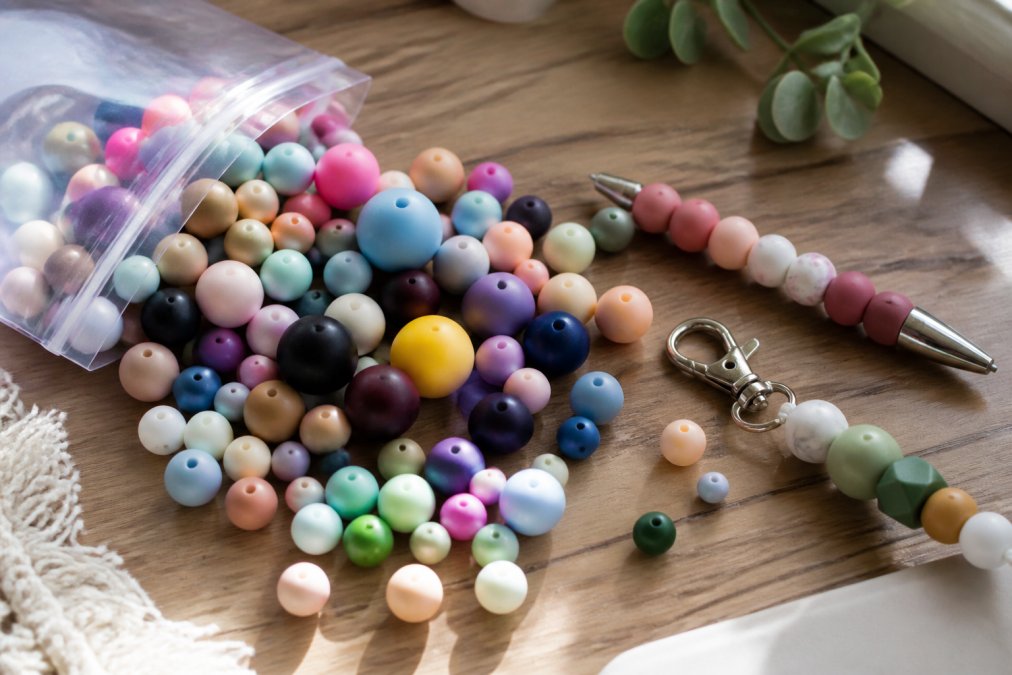
When you buy bulk silicone beads for crafts, the first decision is size and shape, because these determine what your finished project can be. Most crafters building pens, keychains, and wristlets work with 12 mm to 15 mm beads, which fit standard loop turners and cup charm wires. We stock solid rounds, lentil spacers, abacus shapes, wavy spacers, hexagons, and liquid jelly beads.

Color is where bulk silicone beads shine. Most suppliers offer solid colors, marbled patterns, buffalo prints, checkered designs, and pearl finishes. Mixed bags are the smartest way to start because they give you assorted colors and occasional focal beads in one purchase.
Quick Comparison: Best Bulk Silicone Beads for Crafts
The best bulk silicone beads for crafts depend on your project type. For beaded pens and cup charms, 15 mm rounds are the workhorse. For lanyards and keychains, mixing 12 mm lentil and abacus spacers with a 15 mm focal creates visual rhythm. For small business owners, solid-color packs keep inventory predictable, while mixed bags work well for one-off custom orders.

Below is a quick reference:
Product |
Size |
Count |
Price |
Best For |
|---|---|---|---|---|
Solid Silicone Beads |
15 mm |
20 |
$2.00 |
Pens, keychains, matching sets |
Silicone Bead Mixed Bag |
15 mm |
30-60 |
$7.00 |
Testing colors, custom mixes |
Lentil Spacers |
12 mm |
40 |
$2.50 |
Texture between large beads |
Abacus Spacers |
14 mm |
20 |
$2.50 |
Lanyards, structured designs |
Wavy Spacers |
12-16 mm |
20 |
$2.50 |
Playful, organic looks |
Sugar Beads |
20 mm |
10 |
$5.00 |
Statement pieces, chunky charm |
Bulk Acrylic vs Silicone Beads: Which Material Wins for Your Project?
The choice between acrylic and silicone comes down to what you are making, not which material is "better." Acrylic beads are rigid, hold intricate shapes, and work well for jewelry findings, bookmarks, and decor where structure matters. Silicone beads are soft, flexible, and grippy, making them ideal for items handled constantly: pens, cup charms, wristlets, and lanyards. If you sell to parents or make items for kids, silicone is the safer default because it is non-toxic and gentle on teeth.
Silicone also wins on durability in everyday use. It resists cracking when dropped, holds color well, and cleans easily with a damp cloth or mild soap and water. The tradeoff is that silicone does not hold sharp detail the way acrylic does, so if you want a precise geometric focal, acrylic is the better pick. Many crafters use both: silicone as the base beads and acrylic focals for visual interest. We carry both materials, so you can test the feel side by side before committing.
How to Start a Silicone Bead Craft Business with Bulk Orders
Starting a silicone bead craft business is less about talent and more about consistent sourcing and predictable cost per piece. If you plan to sell finished keychains, pens, or wristlets, buy bulk silicone beads in solid colors that match a cohesive brand palette. Mixed bags are great for personal projects, but retail customers expect repeatable designs, so you need to be able to reorder the same color.
Bulk savings come from buying more pieces per pack, not from hunting for discounts on odd lots. Look for suppliers that offer mixed counts with focals, like the 15 mm mixed bags at $7.00, because focals are the most expensive component when bought individually. A common mistake is underpricing finished goods because the bead cost seems trivial. Count every component: beads, cord, findings, and packaging.
Project-Specific Bead Calculators and Mixing Tips
Before you buy bulk silicone beads for crafts, calculate how many beads each project actually consumes. A standard beaded pen takes roughly 25 to 30 beads at 15 mm. A cup charm uses 15 to 20 beads depending on the cup size. A wristlet or lanyard runs 30 to 40 beads. A 20-pack of solid beads makes less than one full pen, so buy accordingly or mix in spacers to stretch your count.
Mixing sizes is the fastest way to make your designs look intentional. Use a 15 mm round as your base, then alternate with 12 mm lentil or wavy spacers to create texture. Add one focal bead every 5 to 7 beads to draw the eye. For a cohesive look, stay within one color family: pair pearl and solid finishes, or stick to checkered and buffalo prints with a solid spacer between them. We sell 14 mm hexagons and 15 mm liquid jelly beads individually, letting you test accent beads without committing to a full pack.

Final Tips for Buying Bulk Silicone Beads for Crafts
Buying bulk silicone beads for crafts comes down to three habits: verify the material, plan your project count, and buy from a supplier you can reorder from consistently. There is a fourth habit that most guides ignore entirely: knowing how to care for the beads once they are in your inventory and in your customers' hands. Silicone is durable, but it is not indestructible, and proper care extends the life of your raw materials and finished pieces.
How to Clean and Sanitize Silicone Beads
Silicone is naturally resistant to bacteria and mold, which is one reason it is preferred for items that get handled, chewed, or exposed to moisture. But beads pick up dust, oils, and debris during storage, shipping, and handling. Here is the safe cleaning routine for both raw beads and finished pieces:
- Daily cleaning: Wipe with a damp cloth and mild dish soap. Rinse thoroughly. Silicone is non-porous, so soap residue is the main concern, rinse until the beads no longer feel slippery.
- Deep sanitizing: Submerge beads in a solution of 1 part white vinegar to 3 parts warm water for 10 minutes. Rinse well. This kills surface bacteria without degrading the silicone. Do not use bleach; it can break down the polymer over time.
- Dishwasher safe: Most food-grade silicone beads can go on the top rack of a dishwasher. Use a mesh bag to prevent beads from escaping into the dishwasher filter. Skip the heated dry cycle, high heat is unnecessary and can accelerate wear on colored beads.
- Boiling: For chewelry or teething items, boiling for 2-3 minutes is an effective sanitizing method. Do not boil longer; extended exposure to rolling boil can soften the bead structure.
What NOT to Do with Silicone Beads
- Do not use alcohol-based cleaners. Isopropyl alcohol can cause some silicone formulations to swell or become tacky over time. If you need a stronger disinfectant, use the vinegar solution instead.
- Do not expose to direct sunlight for extended periods. UV light can fade colors, especially bright pinks, oranges, and reds. Store beads in opaque containers or in a drawer away from windows.
- Do not store beads in airtight plastic bags while damp. Even though silicone does not absorb water, moisture trapped in a sealed bag can promote mold growth on cords or findings that are stored with the beads. Dry beads completely before bagging.
- Do not use silicone-based lubricants or sprays near your beads. These can leave a residue that is difficult to remove and may attract dust.
Storage Best Practices for Bulk Inventory
If you buy in bulk, you are storing hundreds or thousands of beads. How you store them affects their longevity and your workflow:
- Use compartmentalized containers, craft storage boxes with adjustable dividers work well for sorting by size and color. Clear containers let you see inventory at a glance.
- Keep beads separated by color family. Silicone beads can transfer dye to each other if stored in direct contact for months, especially in warm conditions. This is rare with quality beads, but it happens with lower-cost imports.
- Label every container with the purchase date. This helps you rotate inventory and identify which batch you are working with if a quality issue arises.
- Store away from heat sources. Silicone is heat-resistant up to about 400°F, but prolonged exposure to temperatures above 150°F (like a hot garage in summer) can cause colors to dull and the material to stiffen.
How to Extend the Life of Finished Pieces
If you sell finished keychains, pens, or chewelry, include a small care card with each order. This reduces returns and builds trust with customers. A simple card might say:
Clean with mild soap and water. Do not use alcohol-based cleaners. Avoid prolonged sun exposure. Not intended for children under 3 years unless supervised.
This one-page insert costs pennies but positions you as a professional seller who understands material care, a differentiator that most bead sellers ignore.
The Final Word on Bulk Buying
The biggest mistake new crafters make is overbuying on a single design idea. Beads are small and storage is easy, but your taste will evolve as you make more pieces. A $2.00 pack of 20 solid beads or a $7.00 mixed bag lets you experiment without locking yourself into a color scheme you will abandon in a month. We also carry discounted and discontinued items, a cost-effective way to stock up on unique beads for custom orders.
Frequently Asked Questions
Where is the best place to buy bulk silicone beads for crafts?
Specialty craft suppliers like Barkers Creative Designs offer better variety and quality control than general marketplaces. Look for a supplier that lists bead counts, exact dimensions, and material certifications like BPA-free food-safe silicone. Buying directly from a specialty store also means you can find mixed bags and spacers that coordinate, which saves you from ordering pieces that don't fit together.
What should I look for when buying silicone beads in bulk?
Check the material first: it should be labeled BPA-free and food-grade silicone. Confirm the bead diameter in millimeters, since 12 mm to 15 mm are the most common sizes for pens and keychains. Look for a stated bead count per pack so you can calculate the cost per bead. Also check the hole size, especially if you plan to use loop turners or thicker cords.
Are there safety standards for silicone beads used in crafts?
Silicone beads sold in the US should be made from food-grade, BPA-free silicone. Reputable sellers state this on the product page. For children's items like chewelry or teething beads, confirm the beads are non-toxic and free from phthalates and lead. Always supervise young children during crafting and play, since beads can pose a choking hazard regardless of material safety.
Is it cheaper to buy silicone beads from wholesale suppliers or marketplaces?
Wholesale suppliers often beat marketplace prices per bead, but shipping costs and minimum order quantities can erase those savings on small orders. Marketplace listings rarely state the exact bead count or material grade. A specialty supplier that offers transparent per-pack pricing, like the $7.00 mixed bags at Barkers Creative Designs, gives you better cost control without forcing you to buy 1,000 beads you don't need yet.
How do I choose between silicone and acrylic beads for my projects?
Choose silicone when you need flexibility, a soft texture, and durability for items that get handled often, like beaded pens, keychains, or chewelry. Acrylic beads are harder, lighter, and offer sharper patterns, but they can crack on impact. For a small business making sensory-friendly products, silicone is the safer choice. For decorative jewelry that won't see rough use, acrylic gives you more pattern options at a lower cost.